
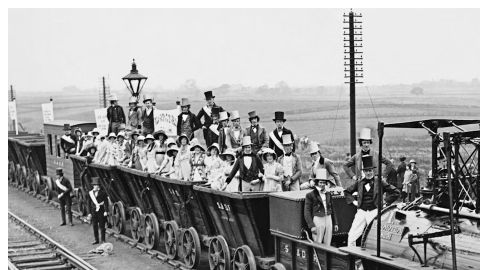
Thank you to Rachel Pease, Emma Martin, Ann Adamson, Jane Scott, Martha Howson,
Jane Hackworth, Harriet Peacock and Ellen Storey.
The early twentieth Centures saw the Britsih Capital market reach a state of maturity well before
any of its global counterparts. This coincided directly with more women participating in the
equity market, many buying shares in innovation associated with the early industrial revolution.
Yes women were some of the earliest investors in the UK railways, they started to invest as
early as 1840 and by 1920 owned around 40% of the stocks.
Women were much more likely to invest solo, which we’d label as ‘angel investing’ today, at 70-
80% vs their male counterparts, at 30–40% according to railway address books. There were a
growing number of single or widowed women at this time who relied on angel investing for their
income as it wasn’t until 1882 that married women were allowed to keep their own income from
investments.
The earliest, foundation railways were heavily concentrated in the North of England, and
particularly the NE. The Stockton and Darlington Railway was the of the earliest railways in the
UK and attracted a significant number of women investors. Many were Quakers, were anti
slavery and social reformists.
The records show that the Stockton and Darlington Railway would not have existed without the
investment from Rachel Pease, Emma Martin, Ann Adamson, Jane Scott, Martha Howson,
Harriet Peacock, Ellen Storey and Jane Hackworth.
In 1863 the Stockton and Darlington Railway became part of the North Eastern Railway
providing a strong capital return.
So some of the earliest women angels on record show up, not in the Capital but in the regions,
in the North of England where single women were quick to realise the investment potential of an
emerging technology, the railways. And it’s telling that igniting more women to invest also
fuelled the economy to take Britain into a golden age.
Now what can we learn from this???
I’d love to hear more from anyone who has any of these women in their family tree or who
knows more about the role they played.
Today there is a much stronger tilt towards the Capital when it comes to angel investing, and
especially when it comes to women angels.